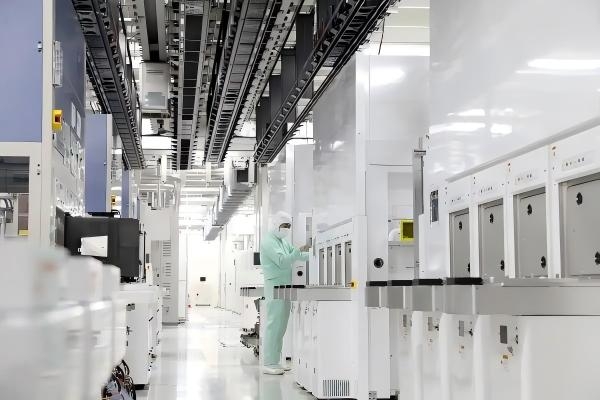
Entering the second half of 2026, the global semiconductor industry is now in a "super cycle" reshaped by AI technology. Driven by the accelerated implementation of generative AI and edge AI, the industry's prosperity continues to rise. However, at the same time, structural supply-demand imbalances and cost pressures have also posed severe challenges to the entire industry chain.

The demand for AI computing power is expanding from "training" to "inference" comprehensively.
In the second half of the year, the focus of AI computing power demand is accelerating from model training to the inference end. As the four major cloud service providers in North America and global tech giants continue to intensify their investment in AI infrastructure construction, the demand for high-bandwidth memory (HBM), large-capacity DRAM, and enterprise-level SSDs by AI servers has shown an exponential explosion. The consumption of storage by a single AI server is several times that of traditional servers. This "siphoning effect" directly leads to the concentration of global storage capacity towards high-value-added products. As a result, the tight supply and demand situation of DRAM and NAND Flash will be difficult to ease in the second half of the year, and the prices of some high-end storage products may even further break through historical highs.

The supply chain is under the dual pressure of capacity bottlenecks and cost transmission.
In the context of extremely strong demand, the capacity release on the supply side is faced with multiple constraints. The advanced process capacity remains fully occupied, while key links such as advanced packaging and HBM substrate plates have become rigid bottlenecks restricting the ramp-up of capacity. For downstream enterprises, this not only means a significant increase in procurement difficulty, but also poses an operational pressure of a substantial increase in the bill of materials (BOM) costs. Due to the soaring storage costs in the consumer electronics sector, the pace of the popularization of edge AI may be forced to be postponed, and the profit space of the industrial chain is facing further compression.

Domestic substitution accelerates, local supply chain resilience stands out
Under the global trend of regional reorganization of supply chains, China's semiconductor industry is entering a crucial window period for "massive substitution". Facing external technological blockades and capacity squeezes, domestic wafer factories are continuously expanding production, and the verification and introduction process of domestic semiconductor equipment and materials has significantly accelerated. In the second half of the year, with the continuous support of policy benefits, local enterprises are expected to further expand their market shares in mature processes, power devices, and niche storage sectors, providing a more stable supply chain "safety cushion" for domestic end-users.
Conclusion
In the second half of 2026, the chip market will present both opportunities and challenges. Under the "super cycle" trend, the stability of the supply chain and the ability to integrate resources will become the core competitiveness for enterprises to break through. We will leverage our acute market perception and profound industry resources to assist customers in securing high-quality production capacity in the complex supply and demand environment, avoiding price fluctuation risks, and jointly navigate through the cycle to achieve a win-win situation in the new blue ocean of the AI era.